Powering Your Future, Saving Your Wallet
Pioneering Industrial Excellence for Over 39+ Years
Benefits of solar Rooftop
Save Energy, Save Money
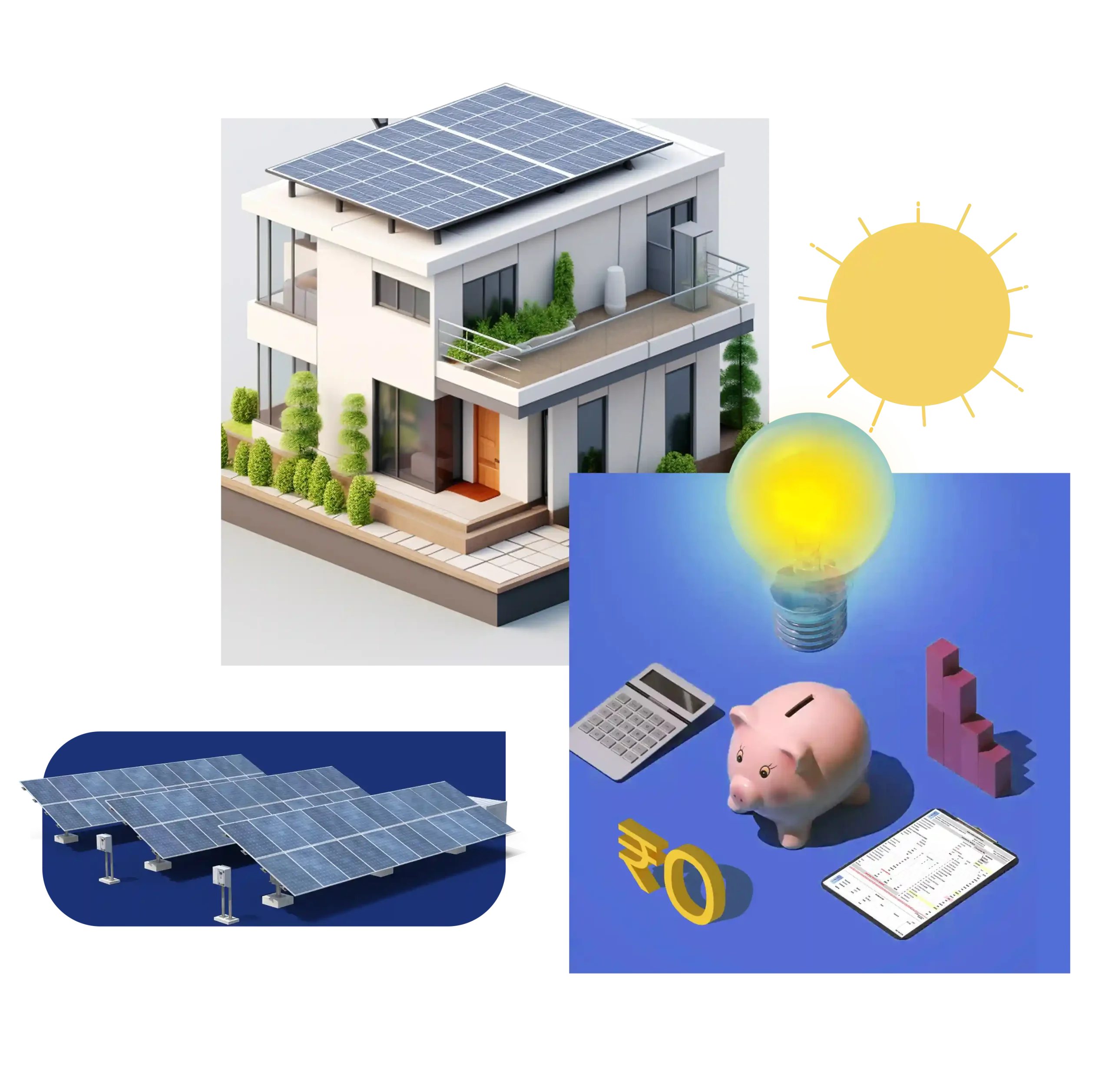
Our solutions cut electricity bills by up to 90%, offering quick ROI in under 3 years.
Run your ACs for Free
No more bills. Free energy for ACs, Computers, and Lights. 30% ROI, then FREE electricity for 25 years!
Zero Electricity Bills
40% subsidy on rooftop installations for your company. Save money, help the environment.
Earn 5x with NRG Solar
Invest 1-3 Lakhs, earn 30% ROI, and go green.
Why NRG Technologists?
NRG Solar is India’s most trusted solar rooftop company. We offer comprehensive solar solutions, including installation and maintenance services.
40+ years of trust
The only company in Gujarat in the solar business since 1985.
Team of experts
A highly technical team with a Ph.D. from IIT Bombay and a US University.
10,000+ happy customers
Satisfied residential and commercial customers all over India.
Introducing our founding team.
Meet the founders behind NRG Technologists, pioneering solar with 44+ years of experience.
Dr. Narendra Yardi
PhD (IIT, Bombay)
Dr. Narendra Yardi, the head of the company, is a renowned technocrat in renewable energy. He graduated from Walchand College of Engineering and completed his M.Tech and PhD from I.I.T. Bombay.
With over 44 years of experience in solar energy, he has developed numerous innovative solar products and played a key role in implementing pioneering solar energy projects during the early stages of the industry.

Mr. Chaitanya Yardi
Master Of Science (TAMU, USA)
Meet Mr. Chaitanya Yardi, the mastermind at NRG Technologists Pvt. Ltd. With a Masters in Mechanical Engineering from Texas A&M University, he impressed industry giants like Shell and Chevron Texaco with his compact design for cleaning underground oil pipelines.
Leading marketing activities, he uses his American knowledge to make NRG more efficient. As a member of the elite Triple Nine Society (TNS), his brilliance sets NRG apart.

What they'll say about us
Frequently Asked Questions (FAQs)
Investing in a solar rooftop system reduces electricity bills, provides energy independence, and offers protection against rising power costs. It also helps industries achieve sustainability goals and reduces their carbon footprint, improving their brand image and meeting regulatory requirements for renewable energy use.
The cost depends on the size and capacity of the system, typically ranging from ₹40,000 to ₹60,000 per kW. Larger installations may have lower per kW costs due to economies of scale. While the initial investment may seem high, the payback period is usually 3-5 years, and the system’s lifespan is 25+ years.
Approximately 10 square meters (or 100 square feet) of shadow-free space is needed per kW of installed capacity. For instance, a 100 kW system would require around 1,000 square meters (10,000 square feet) of available rooftop space.
Several financing options are available, including outright purchase, solar leasing, and Power Purchase Agreements (PPAs). Under the PPA model, a third party owns, operates, and maintains the system, and the industry pays for the electricity generated at a pre-agreed rate, making it a low-capex option.
Net metering allows industries to export surplus electricity generated by their solar system to the grid. This excess power is credited against the electricity consumed from the grid, reducing the overall electricity bill. The net metering policy varies by state, so it’s essential to check local regulations.
The installation timeline depends on the system’s size, complexity, and approvals required. Typically, smaller installations (up to 100 kW) take 4-8 weeks from project initiation to commissioning, while larger systems may take 2-3 months.
Currently, government subsidies are mainly available for residential, not industrial, solar rooftop installations. However, industries can benefit from other incentives like accelerated depreciation (up to 40%), tax benefits, and exemptions from electricity duty in some states.
Solar rooftop systems are low-maintenance. Regular cleaning of panels (every 2-4 weeks) to remove dust and dirt ensures optimal performance. An annual inspection and servicing by a qualified technician can help maintain efficiency and address any technical issues.
Savings depend on the system’s size, electricity consumption, and local tariffs. Typically, industries can expect a 20-50% reduction in electricity bills, with a payback period of 3-5 years. After this, the electricity generated is virtually free for the system’s remaining lifespan.
Most industrial solar rooftop systems are grid-tied and do not function during power outages for safety reasons. However, integrating battery storage or installing a hybrid system can provide backup power, ensuring uninterrupted operations during outages.
 Start Chat